
Healthy Planet, Healthy Pets, Healthy Veterinary Teams
By: Kendall Johnson
Not long ago, a case of heatstroke or smoke inhalation felt seasonal. Rare. Situational.
Now, it’s becoming routine.
Each year, veterinary teams across the country are seeing more environmentally linked illnesses come through their doors. Rising global temperatures are increasing the risk for heatstroke and heat-related illness, especially for dogs living in urban environments (Moon et al., 2021). Poor air quality is also affecting animal health. Research shows that spikes in fine particulate pollution lead to increases in veterinary visits for both cats and dogs (Deschenes et al., 2024). Pets are also exposed to environmental pollutants like endocrine-disrupting chemicals (EDCs), which have been linked to thyroid disease, cancer, and reproductive disorders (Pocar et al., 2023).
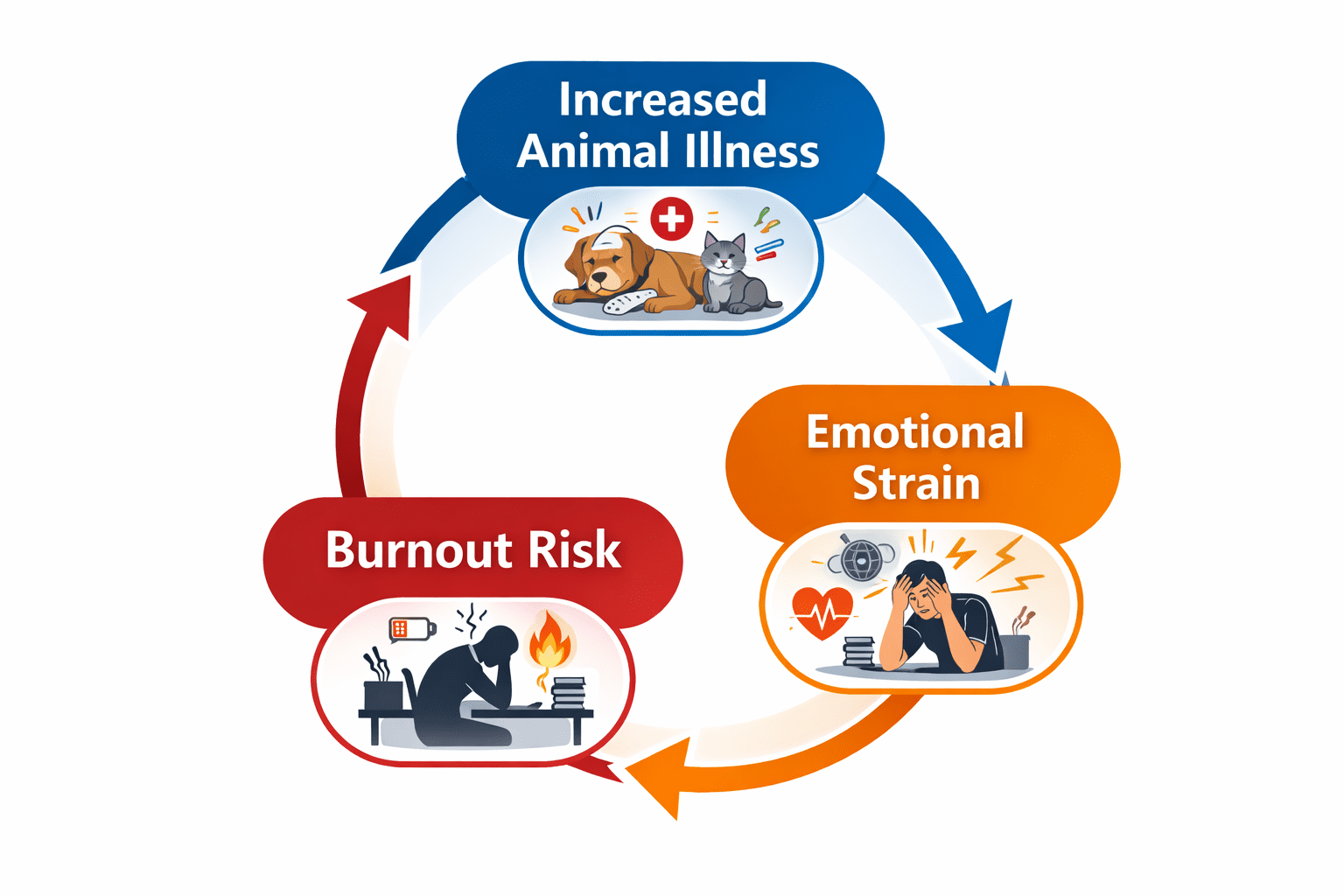
These cases aren’t isolated; they reflect a larger shift in the environments our animals live in.
While we often talk about how environmental change affects pets and livestock, we talk far less about how it impacts the veterinary professionals caring for them. During heat waves, clinics may see multiple cases of heatstroke in a single day due to dogs left outdoors, pets walking on hot pavement, or animals without access to shade or water. Environmental change doesn’t just affect animal health, it directly affects the emotional, mental, and operational load on veterinary teams.
Many environmentally linked illnesses arrive suddenly and severely, yet often stem from exposures that could have been prevented. That combination carries a unique emotional weight. It’s one thing to treat an unavoidable illness, it’s another to treat suffering tied to preventable exposures such as extreme heat, toxic runoff, poor air quality, or unsafe chemical use. Over time, repeated exposure to preventable suffering can contribute to moral distress, compassion fatigue, and emotional exhaustion among veterinary professionals. Veterinary teams aren’t just providing medical care, they are absorbing the emotional consequences of environmental stressors.
Environmentally linked illnesses are frequently time-sensitive and specialized, which often means care is more costly. Interactions with pet owners regarding financial limitations to treatment are frequently cited as a primary psychological stressor for veterinarians (Stetina & Krouzecky, 2022). When families are faced with high, unexpected costs, veterinary teams are often placed in impossible positions. Treatment may exist but remain financially out of reach, leaving clinicians to navigate difficult conversations while an animal continues to suffer. When that decision follows a preventable environmental exposure, the weight can feel heavier, and the emotional strain doesn’t end when the appointment does.
Environmental pressures contribute to emotional strain in veterinary medicine, making environmental solutions also wellbeing solutions. When communities understand heat safety, air quality risks, and safe chemical use, we reduce emergency cases, preventable suffering, and emotional overload in clinics. Climate-informed animal health systems go further by integrating environmental risk into how veterinary care is planned and delivered. This can include preparing clinics and shelters for extreme heat, developing disaster response networks for evacuations and wildfire smoke events, and ensuring veterinary professionals are included in community emergency planning. These approaches strengthen the systems surrounding animal care so veterinary teams are better supported before, during, and after extreme weather events.
When veterinary professionals have agency and influence, that sense of purpose becomes a protective factor for mental health. At the same time, we must continue expanding mental health resources, peer support networks, and workplace cultures that prioritize wellbeing. Environmental change isn’t the only driver of veterinary burnout, but it is an increasingly important one.
On World Health Day, we’re reminded that human, animal, and environmental health are interconnected. A healthy planet supports healthy animals, which support thriving communities. Thriving communities must include veterinary professionals who are supported, protected, and well. Caring about veterinary mental health also means addressing the environmental conditions shaping their work. Prevention protects animals, and the people who treat them.
Sources
Deschenes O., Jarvis S., Jha A. and Radford A.D. (2024). The impact of air pollution on petcare utilization. Grantham Research Institute on Climate Change and the Environment Working Paper 412. London: London School of Economics and Political Science
Moon K.E., Wang S., Bryant K. and Gohlke J.M. (2021). Environmental Heat Exposure Among Pet Dogs in Rural and Urban Settings in the Southern United States. Front. Vet. Sci. 8:742926. doi: 10.3389/fvets.2021.742926
Pocar, P., Grieco, V., Aidos, L., & Borromeo, V. (2023). Endocrine-Disrupting Chemicals and Their Effects in Pet Dogs and Cats: An Overview. Animals, 13(3), 378. https://doi.org/10.3390/ani13030378
Stetina, B. U., & Krouzecky, C. (2022). Reviewing a Decade of Change for Veterinarians: Past, Present and Gaps in Researching Stress, Coping and Mental Health Risks. Animals, 12(22), 3199. https://doi.org/10.3390/ani12223199
Recent Posts
About Us
NOMV addresses well-being in the veterinary medical community through evidence driven programming that raises awareness on mental health in the community while providing innovative prevention and intervention programming.